


Care – Student Support and Respect Unit
Care – Student Support and Respect Unit
Care supports you if you experience psychological or sexual harassment, violence or discrimination during your studies at ULB or HELB.
Our team listens without judgement, helps you better understand your needs and informs you about the options available to you. If needed, we can also refer you to other services better suited to your situation.

About us
How we work
FAQ
Our resources
Care is the support service at ULB and HELB dedicated to helping students who experience psychological or sexual harassment, violence or discrimination.
Find out more about who we are, how we work, and the answers to our most frequently asked questions.


Get Support from Care
I am a student association or a student
If you're a student, Care can support you if you experience harassment, violence or discrimination at ULB or HELB.
If your student association or society is facing a similar issue, Care can also offer guidance and support.


Contact Care
Opening Hours
Monday to Friday, 8 am to 5 pm
care@ulb.be to email us directly
0477652551 to contact us by phone or WhatsApp
Fill in our online form to make an initial written contact anonymously.

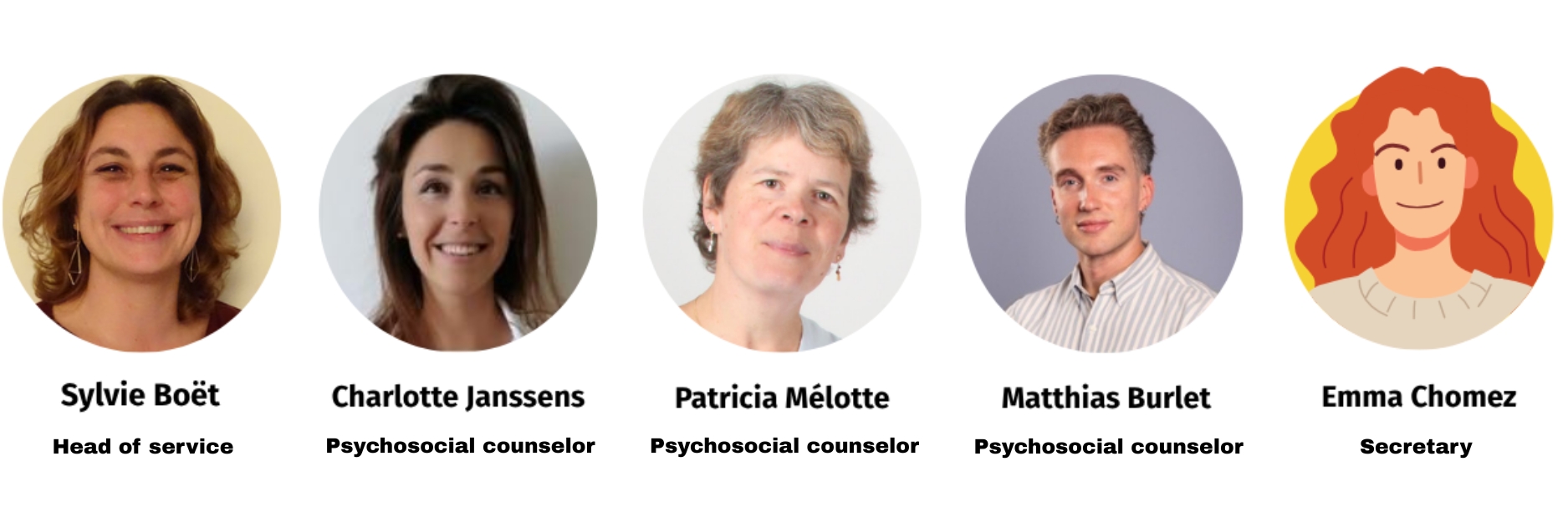
The Care team
Many students experience these situations without always feeling able to speak up
- Psychological Harassment (Bullying)
-
A pattern of abusive behaviour involving repeated acts, whether similar or different, occurring within or outside the University over a period of time, which are intended to or have the effect of undermining a student's personality, dignity, or physical or psychological integrity, jeopardising their studies, or creating an intimidating, hostile, degrading, humiliating or offensive environment. Such behaviour may take the form of words, intimidation, actions, gestures or one-sided written communications.
These behaviours may be linked to age, marital status, birth, financial circumstances, religious or philosophical beliefs, political opinions, trade union beliefs or affiliation, language, current or future health conditions, disability, physical or genetic characteristics, social background, nationality, perceived race, skin colour, ancestry, national or ethnic origin, sex, sexual orientation, gender identity or gender expression.
These situations can arise in various contexts and may involve staff members, students, people close to you, or others.
Examples include:
- Experiencing psychological pressure, intimidation, blackmail or threats
- Being excluded from a group
- Receiving belittling or demeaning remarks
- Being the target of rumours
- Experiencing excessive monitoring or criticism
- Receiving humiliating messages or comments, whether publicly or privately
- Sexual Harassment
-
Any unwanted verbal, non-verbal or physical behaviour of a sexual nature that is intended to or has the effect of violating a student's dignity or creating an intimidating, hostile, degrading, humiliating or offensive environment.
These behaviours can occur in various contexts and may involve staff members, students, people close to you, or others.
Examples include:
- Sexist or sexually suggestive jokes or comments
- Being looked at in a way that makes you feel uncomfortable
- Repeated unwanted advances despite having said no
- Promises or threats made in exchange for sexual favours
- Violence
-
Any situation in which a student is threatened or subjected to psychological or physical aggression.
These situations can arise in various contexts and may involve staff members, students, people close to you, or others.
Examples include:
- Being shouted at or humiliated
- Being hit, pushed or shoved
- Being threatened
- Being confined or physically prevented from moving freely
- Discrimination
-
Being treated differently because of your skin colour, age, sexual orientation, ideological or religious beliefs, disability, social class, physical characteristics or any other characteristic protected by law.
These situations can arise in various contexts and may involve staff members, students, people close to you, or others.
Examples include:
- Receiving remarks about your background, religion or skin colour
- Receiving remarks about your gender, sexual orientation or gender identity
- Being belittled or ignored because of these characteristics
- Hearing stereotypical statements about a particular group or minority
- Hearing racist jokes or jokes targeting someone's religious beliefs
A pattern of abusive behaviour involving repeated acts, whether similar or different, occurring within or outside the University over a period of time, which are intended to or have the effect of undermining a student's personality, dignity, or physical or psychological integrity, jeopardising their studies, or creating an intimidating, hostile, degrading, humiliating or offensive environment. Such behaviour may take the form of words, intimidation, actions, gestures or one-sided written communications.
These behaviours may be linked to age, marital status, birth, financial circumstances, religious or philosophical beliefs, political opinions, trade union beliefs or affiliation, language, current or future health conditions, disability, physical or genetic characteristics, social background, nationality, perceived race, skin colour, ancestry, national or ethnic origin, sex, sexual orientation, gender identity or gender expression.
These situations can arise in various contexts and may involve staff members, students, people close to you, or others.
Examples include:
- Experiencing psychological pressure, intimidation, blackmail or threats
- Being excluded from a group
- Receiving belittling or demeaning remarks
- Being the target of rumours
- Experiencing excessive monitoring or criticism
- Receiving humiliating messages or comments, whether publicly or privately
Any unwanted verbal, non-verbal or physical behaviour of a sexual nature that is intended to or has the effect of violating a student's dignity or creating an intimidating, hostile, degrading, humiliating or offensive environment.
These behaviours can occur in various contexts and may involve staff members, students, people close to you, or others.
Examples include:
- Sexist or sexually suggestive jokes or comments
- Being looked at in a way that makes you feel uncomfortable
- Repeated unwanted advances despite having said no
- Promises or threats made in exchange for sexual favours
Any situation in which a student is threatened or subjected to psychological or physical aggression.
These situations can arise in various contexts and may involve staff members, students, people close to you, or others.
Examples include:
- Being shouted at or humiliated
- Being hit, pushed or shoved
- Being threatened
- Being confined or physically prevented from moving freely
Being treated differently because of your skin colour, age, sexual orientation, ideological or religious beliefs, disability, social class, physical characteristics or any other characteristic protected by law.
These situations can arise in various contexts and may involve staff members, students, people close to you, or others.
Examples include:
- Receiving remarks about your background, religion or skin colour
- Receiving remarks about your gender, sexual orientation or gender identity
- Being belittled or ignored because of these characteristics
- Hearing stereotypical statements about a particular group or minority
- Hearing racist jokes or jokes targeting someone's religious beliefs
Frequently Asked Questions
-
Is it really confidential?
-
Yes. Nothing you share with Care will be disclosed to anyone (your professors, other students, friends, family, etc.) without your consent.
-
Is my situation "serious enough" to talk about?
-
Whether your experience is recent or happened a long time ago, whether it was a one-off incident or something ongoing, or even if you're unsure about what you've experienced, you are always welcome to reach out.
Your voice matters, and your concerns are always valid. We are here to listen without judgement and help you gain a clearer understanding of your situation.
-
What happens after I contact Care?
-
Care's administrative secretary, Emma, will respond to you within two working days and offer you an appointment within ten working days.
During your appointment, we take the time to listen to you and understand what you're going through. Together, at your own pace, we explore what you need and the best way to move forward.
Care will never take any action without your consent, and you can change your mind at any time.
-
How can I contact Care?
-
Email is our preferred method of contact (care@ulb.be), but you can also reach us by phone or WhatsApp (0477/652551).
You can also contact us through our online form, either by providing your name or anonymously if you'd prefer to keep your identity private at first. The choice is yours. -
Can I contact Care if the incident happened a long time ago or took place off campus?
-
Yes. There is no time limit for reaching out to us, even if the incident happened several months or years ago. This applies to situations that occurred both on and off campus.
Share Your Feedback on Your Experience with Care
We are always looking for ways to improve. We would appreciate hearing your thoughts and feedback about your experience with us.