


An Erasmus Mundus Master's course is a joint Master's programme offered by at least three universities or higher education institutions from different European countries (and sometimes from other parts of the world). These Masters' programmes represent an unprecedented alliance which, far from the traditional frontiers of education, offers students unprecedented opportunities. They encourage student mobility, promote cooperation between universities and aim to offer quality education with an international dimension.
Erasmus Mundus joint masters' programmes cover all disciplines and provide grants for a maximum of two years to the best students taking part in the study programme, with a majority of non-European students.
The course of study takes place in at least two countries participating in the programme, with the possibility of mobility in a partner country depending on the composition of the consortium. Successful completion of the joint Master's programme leads to the award of a double, multiple or joint degree. Placement periods are also often included in the programme.
Six Erasmus Mundus joint Masters' programmes are currently underway at ULB.
WOCC: Contemporary Challenges in the World of Work
NEW!

The Contemporary Challenges in the World of Work (WOCC) international joint Master's programme is an innovative two-year joint Master's degree designed to respond to the dynamics and complexity of global labour markets. Delivered in English, Spanish and French, it is supported by a consortium bringing together the University of Lille (France), Laval University (Canada), ULB (Belgium), the University of Buenos Aires (Argentina), the Complutense University of Madrid (Spain) and Sapienza University of Rome (Italy).
In response to the internationalisation of labour markets, technological change and the climate crisis, this new Master's programme will equip its future students with the skills and knowledge necessary to effectively address the complex challenges related to employment policies, decent work and sustainability.
The WOCC is scheduled to launch at the start of the academic year in September 2026.
Please refer to the calendar below:
- 8 January 2026: online applications open
- 22 March 2026: application deadline
- 30 March - 4 April 2026: admission interviews
- April 2026: publication of results
- September 2026: start of class
- Find out more: master-wocc.eu.
The course will be delivered in English or Spanish and French.
The WOCC Master's is a multilingual programme of excellence that aligns with European social policies and the recommendations of international organisations, notably the International Labour Organisation (ILO). It promotes the principles of dignity at work, such as equal access to employment and social protection, and responds to the European Union's strategic priorities for strengthening social security and inclusion.
Through internships and structured support, the Erasmus Mundus WOCC Joint Master's programme bridges the gap between academic and professional practice. Designed and led by a multicultural and multidisciplinary teaching team of 73 people, the programme offers 70 scholarships of excellence for 120 students who may choose from three specialisations: Labour, Health and Environment - Global Value Chains and Labour Relations - Labour Regulations and Sustainable Organisation Management
The WOCC programme aims to cultivate a new generation of professionals skilled in navigating the complexities of the labour market and addressing its challenges in an increasingly interconnected and dynamic world. By combining a solid theoretical foundation with the practical skills necessary for effective action, the programme will empower its graduates to make meaningful contributions to the future of labour.
CYBERUS: Master's in cybersecurity
The CYBERUS master's degree in cybersecurity is a joint programme run by the Université Libre de Bruxelles, the Université Bretagne Sud (UBS, coordinator) and the University of Luxembourg, in collaboration with the Tallinn University of Technology - TalTech (Estonia).
It aims to tackle 5 key challenges: Growing digital threats, the shortage of cybersecurity skills, EU cohesion, digital sovereignty and the gender imbalance in scientific studies.
This highly integrated programme draws on the proven cybersecurity expertise of the three partners and a network of 47 international associate partners, many of whom are key players in the cybersecurity field.
International mobility is an integral part of the programme, with students spending the first two semesters at UBS (Lorient, France). They also travel to TalTech (Tallinn, Estonia) for a Winter School on cyber threats. In the 3rd semester, students choose ULB or UL (Luxembourg) depending on their specialisation, and the 4th semester is dedicated to a compulsory 5-month work placement in an accredited institution.
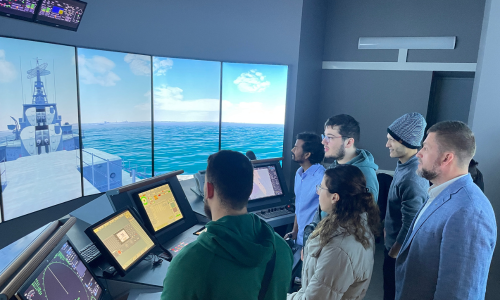
- Find out more: master-cyberus.eu
DEAI: Data Engineering and Artificial Intelligence

The Data Engineering and Artificial Intelligence programme aims to become a global benchmark in the development of knowledge, talent and leadership in data engineering and artificial intelligence, in order to address the productivity gap in complex, large-scale projects focused on AI and data.
The Data Engineering and Artificial Intelligence (DEAI) consortium is composed of five European higher education institutions with long-standing expertise in data engineering and artificial intelligence, bringing together world-renowned researchers and teachers in these fields: the Université libre de Bruxelles (ULB), the Universitat Politècnica de Catalunya (UPC), the Technische Universität Wien (TUW), the Università degli Studi di Padova (UniPD) and the Université Claude Bernard Lyon 1 (UCBL). The consortium is complemented by a network of associated partners.
-
Find out more: https://deai.ulb.be/
Erasmus Mundus Joint Master in Tropical Biodiversity and Ecosystems -TROPIMUNDO

TROPIMUNDO is a mobility programme in tropical biology coordinated by Professor Farid Dahdouh-Guebas of ULB. It comprises 16 partner institutions on 4 continents, including 11 destinations in the tropics. It is the first Master's programme (2 years, 120 ECTS) to integrate the knowledge and know-how of four interconnected and threatened tropical ecosystems: tropical forests, wetlands (both terrestrial and coastal, such as mangrove forests), seagrass beds and coral reefs. Courses cover a wide range of topics relevant to tropical biodiversity and ecosystems. Specialisation is possible in a wide range of subjects.
A unique feature of this programme is that students can spend a whole semester in a field school in the humid tropics of the Caribbean, the Amazon, Africa or Asia.
At the end of the programme, students receive a joint degree from the European universities involved in their mobility. Students can choose a pathway entirely in English, English/Spanish, English/French, or English/French/Spanish.
- Find out more: tropimundo.eu
MITRA: Transnational Migrations
MITRA is a bilingual, interdisciplinary 2-year Master's programme in the social sciences, designed to meet the acute need for expertise triggered by contemporary migration processes. MITRA studies the transnational dimensions of migration and their impact on contemporary societies.
It is offered by a consortium of 7 partner universities and 3 associate universities. MITRA trains researchers specialising in migration phenomena, analysts of public policies on migration and integration and practitioners of intercultural mediation.

- Find out more: Master MITRA
ILSPSD: International International Law of Security, Peace and Sustainable Development
Develop global solutions at the intersection of law, peace, security and sustainability, and join the next generation of lawyers and policymakers.
The world is facing a period of unprecedented challenges. Armed conflict, terrorism, forced migration, climate change, biodiversity loss, hybrid threats and democratic backsliding are combining to form a global “polycrisis” that threatens security, peace and sustainable development. Addressing these interrelated issues requires holistic and multidisciplinary approaches, as well as leaders capable of navigating the political, legal and institutional complexities of our time.
The Erasmus Mundus Joint Master's Degree in International Law of Security, Peace and Sustainable Development (ILSPSD) was created in direct response to this need.
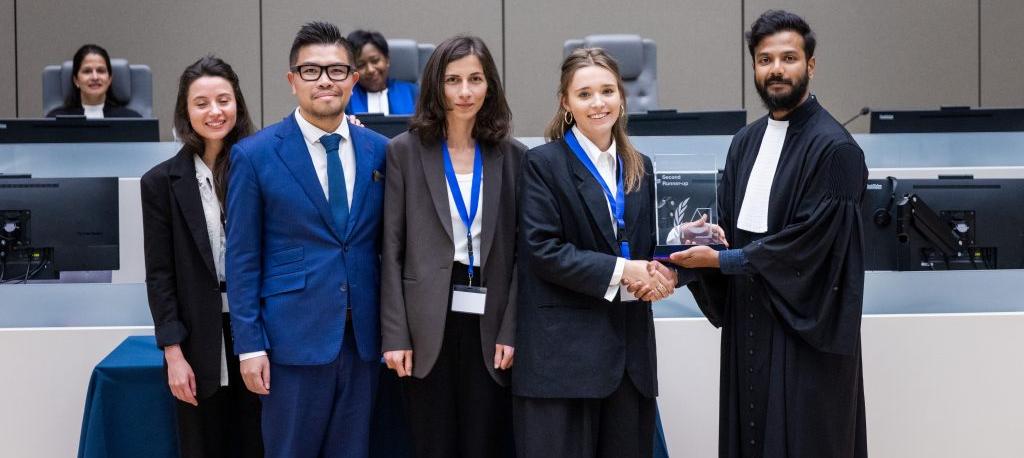
This unique two-year programme brings together the expertise of six European partner higher education institutions offering degrees and a global network of 30 associated partners to train the next generation of international lawyers and policy makers. Its integrated curriculum combines international law with political studies, sustainability and security, preparing graduates to understand and shape global governance in this period of instability and transformation.
This programme is implemented by a consortium of nine European higher education institutions: Leuphana University of Lüneburg, the Barcelona Institute of International Studies, the University of Tartu, the University of Glasgow (CIVIS partner), Nova University Lisbon and the Université libre de Bruxelles.
-
Find out more: ILSPSD Master